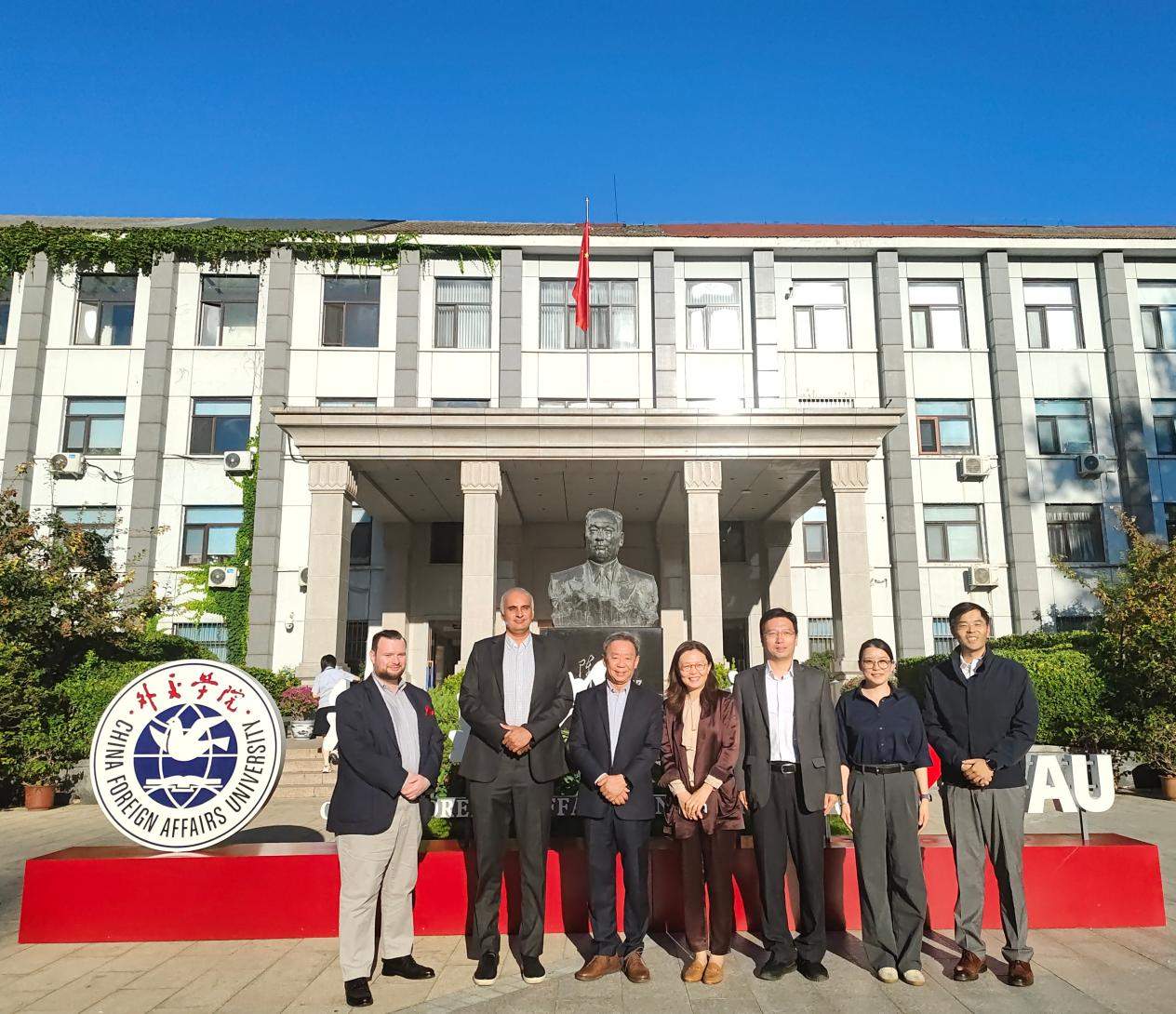
On the afternoon of September 10, 2026, a delegation from the Institute of South Asian Studies of the National University of Singapore (ISAS-NUS) visited our university and held discussions on regional studies, the international and regional situation, and academic cooperation. The delegation included Professor Tan Tai Yong, President of the Singapore University of Social Sciences and Chairman of the ISAS-NUS Management Board, Associate Professor Iqbal Singh Sevea, Director of ISAS, and Dr. Ivan Lidarev, Research Fellow of ISAS. The discussion was chaired by Professor Yang Yue, Deputy Director of the Institute of Asian Studies, with Professor Ren Yuanzhe of the Department of Diplomacy and Foreign Affairs Management, Research Fellow Wu Lin and Lecturer Ma Yuchen of the Institute of Asian Studies participating.
At the discussion, Professor Tan Tai Yong introduced the development history, institutional positioning and research mission of ISAS, noting that attention should be paid to the interplay between global political and economic changes and the development of South Asia, and that cross-regional and cross-issue research should be strengthened. Associate Professor Sevea introduced the Institute's current main research areas and emerging topics such as digital trade, artificial intelligence and data governance, and Dr. Lidarev shared ideas for advancing relevant academic dialogues.
Professor Yang Yue introduced the University's educational features, discipline development and the basic situation of the Institute of Asian Studies, and briefed on relevant dialogue mechanisms as well as work on regional and country studies and security studies in emerging fields. Participating faculty members, drawing on their respective research areas, exchanged views with the Singaporean side on changes in the regional order, cross-regional linkages, supply chains and digital security.
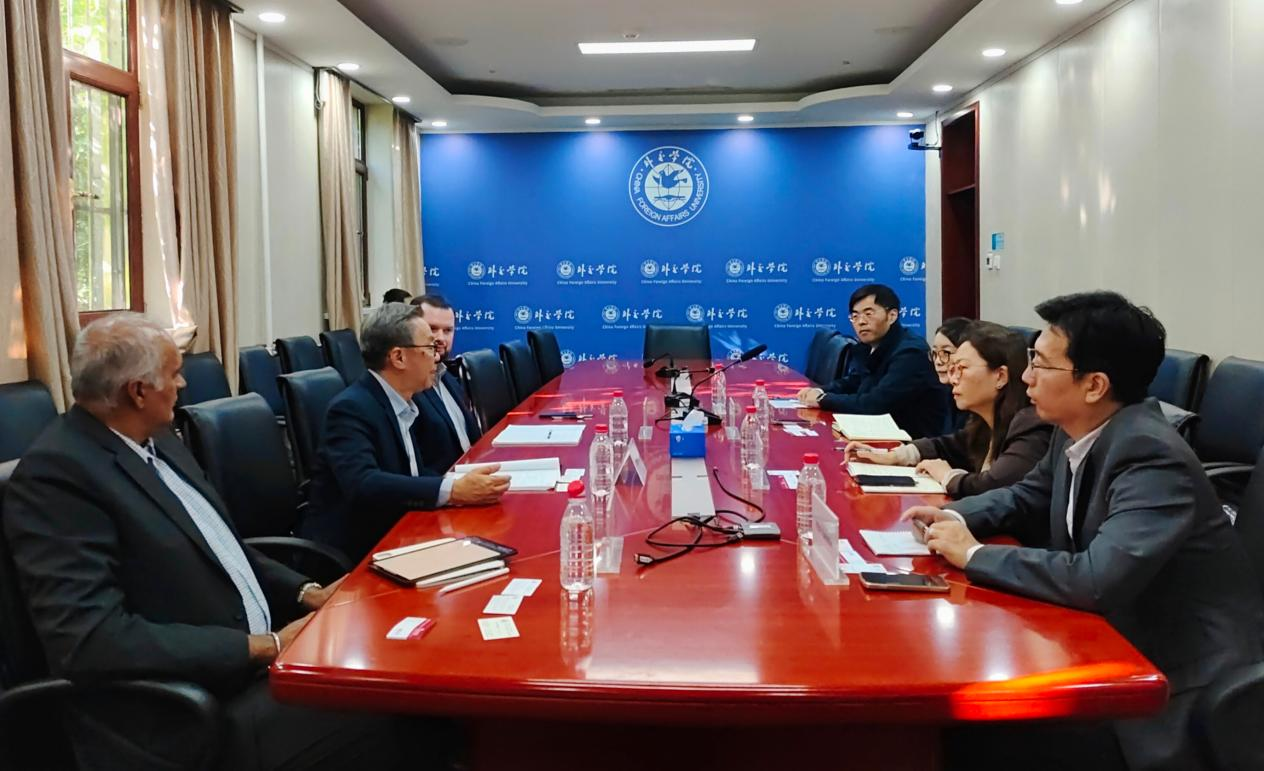
The two sides also exchanged views on forms of cooperation including academic dialogues, mutual visits of scholars, course exchanges and student cultivation, expressing willingness to deepen exchanges in research areas of common concern.