On December 16, 2025, the School of International Economics invited Lu Miaomiao, Manager of the Financial Markets Department at Standard Chartered Investment Consulting Co., Ltd., to deliver two classroom lectures on African development at the Shahe Campus.
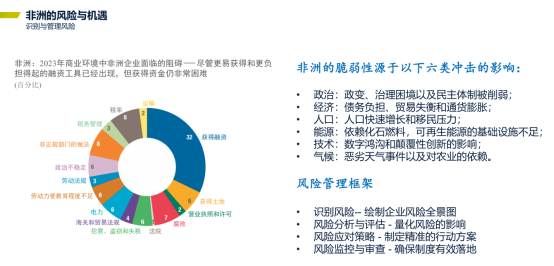
In the International Trade and Overseas Investment Insurance class, the lecture focused on investment opportunities and risks in Africa. At the outset, Lu Miaomiao invited students to describe their impressions of Africa through a series of questions. Drawing on her personal experiences and observations, she illustrated Africa's multifaceted nature—highlighting both its underdeveloped aspects, such as frequent power outages, and its advanced elements, like Lekki Port in Nigeria and the Global Trade Centre in Nairobi, Kenya. Next, Lu Miao Miao reviewed the evolution of China-Africa cooperation across four phases: 1949-1965, 1966-1978, 1978-2000, and since 2000. She examined changes in key players, approaches, and sectors, using infrastructure as a case study to analyze project types and cooperation models. Finally, she focused on analyzing risks associated with investing in Africa, including political instability, financing, insufficiently educated labor force, tax administration, crime, and theft. Impressively, interest rates in some countries reached as high as 30%. She then engaged students in discussing theoretical risk management frameworks and practical considerations for their application. She particularly cautioned that perceptions of both opportunities and risks in Africa—and for investing in Africa—vary significantly among individuals and institutions.
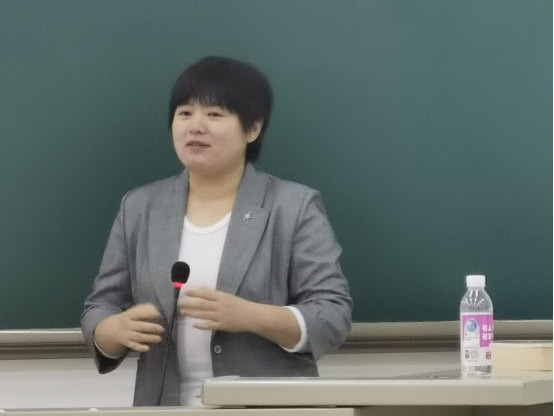
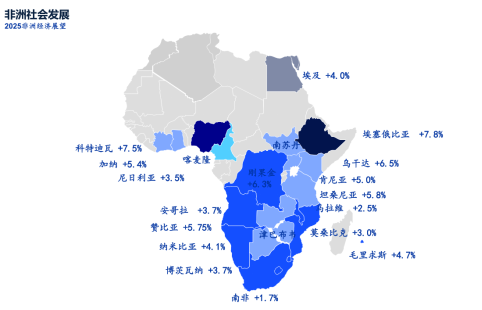
In the Global Development course, the lecture focused on Africa's socioeconomic development. As the continent with the highest number of least developed countries and the fewest high-income economies, Africa faces the most pressing development challenges. Lu Miaomiao highlighted four key obstacles to Africa's progress: colonial legacies, state governance, international rules, and endogenous drivers. She illustrated with examples how international rules formulated by Western nations often constrain Africa's socioeconomic progress. Africa's fundamental issues lie in the absence of an autonomous industrial system, a stable institutional environment, and sustained innovation capacity—all of which cannot be directly conferred through external aid. In fact, many developmental problems are also linked to structural flaws inherent in the aid itself. For instance, conditional aid distorts development priorities: demanding privatization and public spending cuts weakens governments' capacity to deliver public services and exacerbates wealth inequality. Aid fragmentation is also pronounced: a single African nation may receive assistance from dozens of countries (or institutions), with projects lacking coordination and failing to generate synergies. Of course, Africa's 54 nations exist at different developmental stages, pursuing varied strategies and paths with significant disparities in economic growth rates. She suggested paying attention to the development of Nigeria and Tanzania. Finally, Lu Miaomiao analyzed the importance of credit ratings, highlighting the fact that very few African countries hold investment-grade sovereign credit ratings. She then shared the credit rating reform initiative proposed at the 2025 G20 Summit hosted by South Africa, which advocates for: emphasizing the value of natural capital and critical minerals; enhancing Africa's capacity for dialogue with rating agencies; strengthening oversight of rating agencies; and utilizing development finance instruments to reduce financing costs.
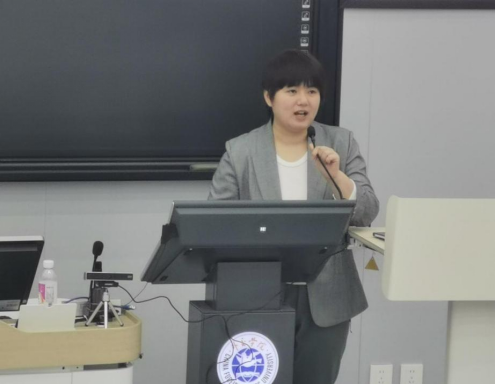
After graduating with a master's degree in World Economics from our university, Lu Miaomiao worked at Standard Bank (Uganda) for three years. She then continued her career in Africa-related finance at Standard Bank Investment Consulting (Beijing) Co., Ltd., frequently traveling between China and Africa. Her experiences working and living in Africa, coupled with her long-term focus and deep understanding of the continent, made her descriptions of Africa vivid and profound, complementing the limitations of classroom teaching. Moreover, she consistently engaged with students throughout the session, presenting English-language original editions of African books to those actively participating in discussions. Her aim was to ignite students' interest in Africa.
