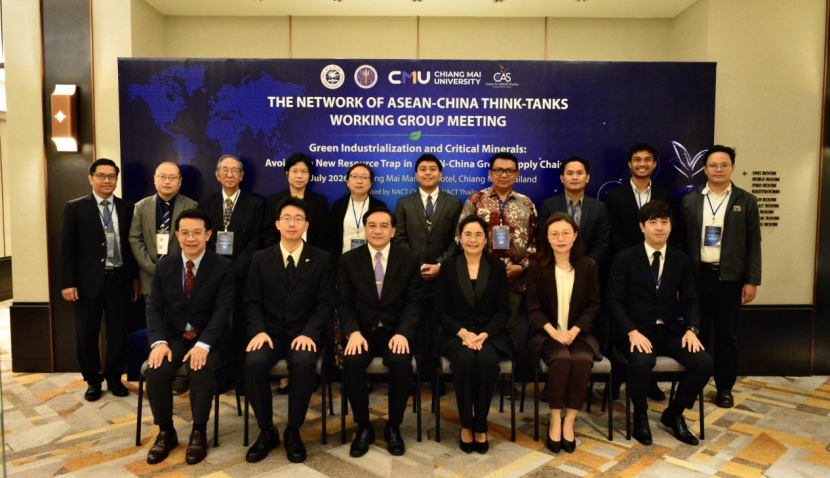
On July 20, 2026, the Network of ASEAN-China Think-tanks (NACT) working group meeting on 'Green Industrialization and Critical Minerals: Avoiding a New Resource Trap in China-ASEAN Green Supply Chains' was successfully held in Chiang Mai, Thailand. Co-hosted by NACT China and NACT Thailand and organized by the ASEAN Studies Center of Chiang Mai University, the meeting brought together about thirty experts and scholars from China and ASEAN countries. Professor Yang Yue, Deputy Director of the Institute of Asian Studies of CFAU, led the NACT China delegation at the meeting.
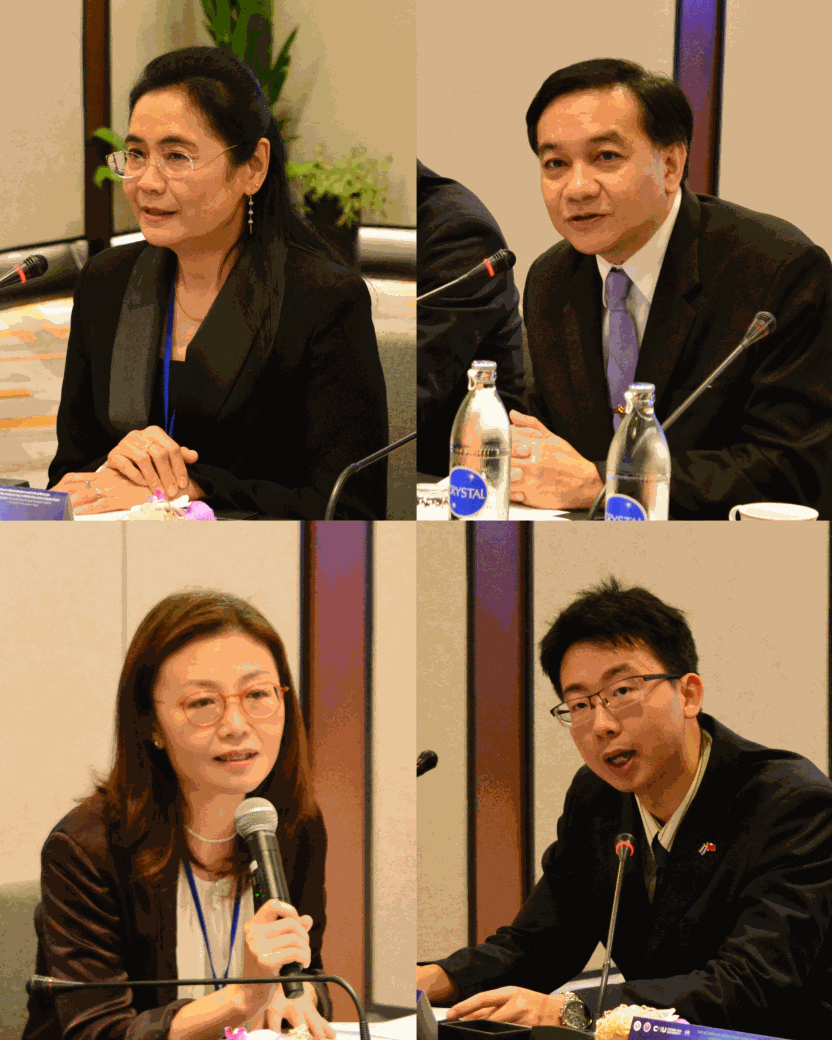
Opening remarks were delivered by Ms. Penapa Kanchana, Inspector-General of Thailand's Ministry of Higher Education, Science, Research and Innovation; Professor Charin Techapun, Vice President of Chiang Mai University; Professor Yang Yue, Deputy Director of the Institute of Asian Studies of CFAU; and Mr. Lu Shangbin, Consular Attaché of the Consulate-General of the People's Republic of China in Chiang Mai. The three sessions of speeches and discussions were chaired respectively by Assistant Professor Sineena Senchep, Assistant Director of the ASEAN Studies Center of the Faculty of Economics of Chulalongkorn University; Dong Liang, Associate Research Fellow of the Institute of Asian Studies of CFAU and Director of the Center for Environmental Diplomacy Studies; and Associate Professor Nissi Pantamit, Head of the ASEAN Studies Center of Chiang Mai University.
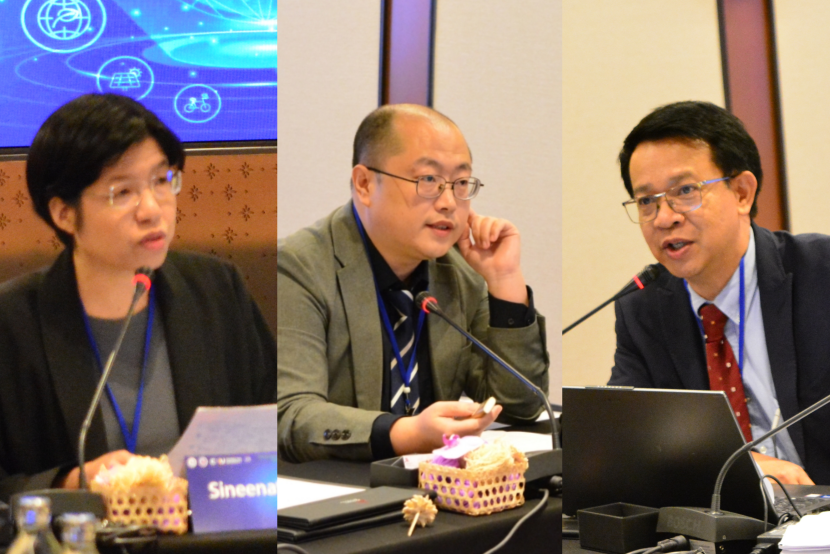
The participating experts systematically reviewed the practical experience and policy progress of various countries in the green transition around topics including green supply chains, green industrialization development, the upgrading of the electric vehicle industry, rare earth development and governance, and China-ASEAN green cooperation, and held in-depth discussions on paths and countermeasures for resource-based economies to avoid the 'resource trap' in the process of industrialization. All parties agreed that, on the basis of respecting each country's development stage and institutional differences, priority should be given to green industrialization, local value creation and regional coordination, and that through practical measures such as strengthening policy dialogue, promoting the alignment of technical standards, deepening industrial chain cooperation and improving environmental, social and governance (ESG) performance, the resilience and sustainability of regional green supply chains should be gradually enhanced. The meeting provided valuable policy recommendations and action ideas for deepening China-ASEAN green economy strategy alignment and supporting regional critical minerals cooperation and green industrial transformation.
After the meeting, the participating experts and scholars conducted field visits to the Smart Campus Management Center and the Energy Research and Development Center of Chiang Mai University.
