From August 11 to 14, 2026, while leading a delegation to the Network of East Asian Think-tanks (NEAT) 2026 Annual Conference and the 44th Country Coordinators Meeting, Wang Shiting, Secretary of the CPC Committee of China Foreign Affairs University and Secretary-General of the Research Center for a Community with a Shared Future for Humanity, successively held exchanges with the Korea National Diplomatic Academy (KNDA), Dongseo University and renowned experts from relevant think tanks, and delivered a lecture on building a community with a shared future for humanity at the KNDA.
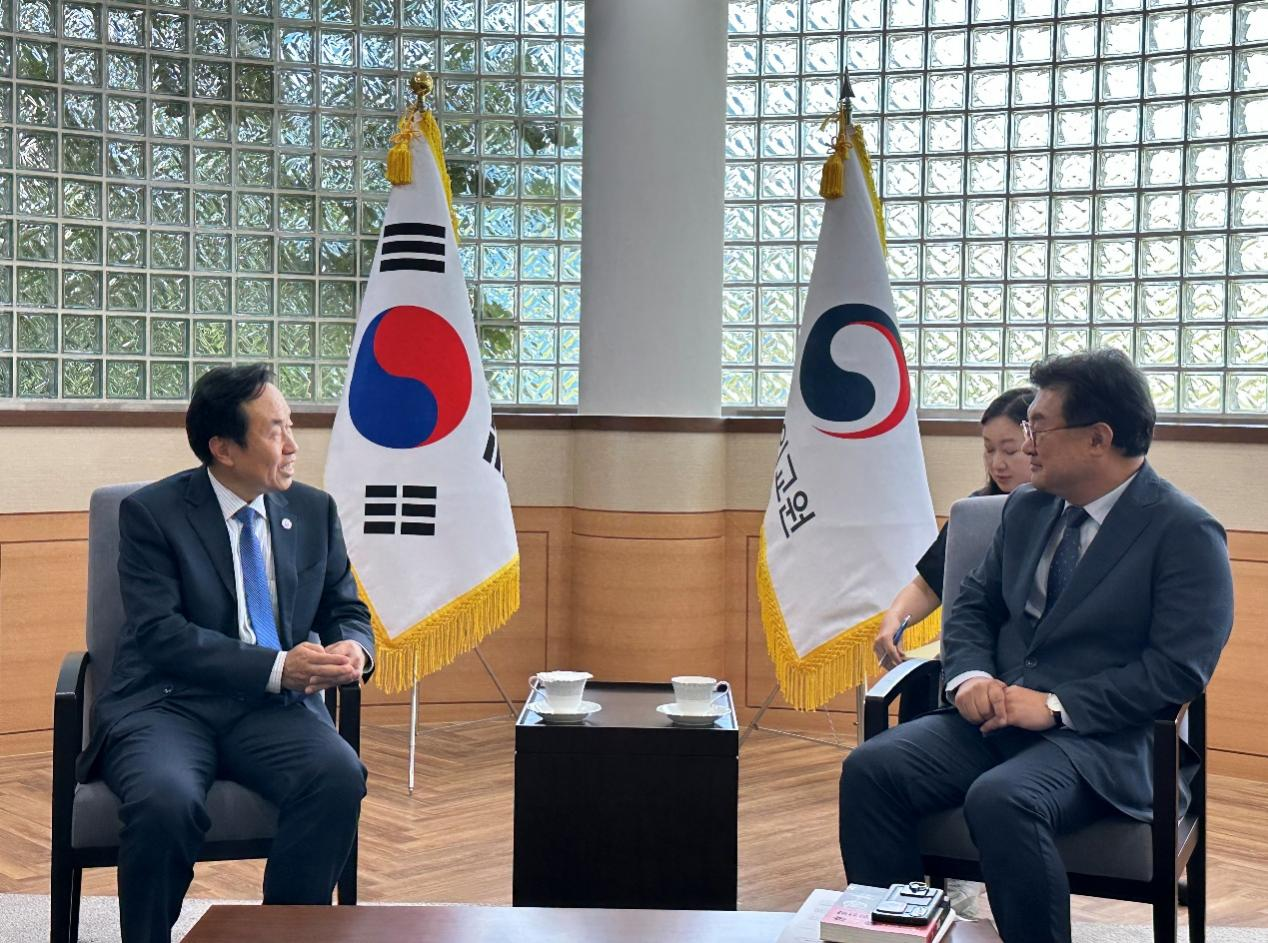
On August 11, Secretary Wang Shiting and his delegation visited the Korea National Diplomatic Academy. Kim Heung-kyu, the newly appointed Chancellor of the KNDA, met with Secretary Wang Shiting and his delegation. The two sides introduced the basic situation of their respective academies and agreed to continue deepening cooperation.
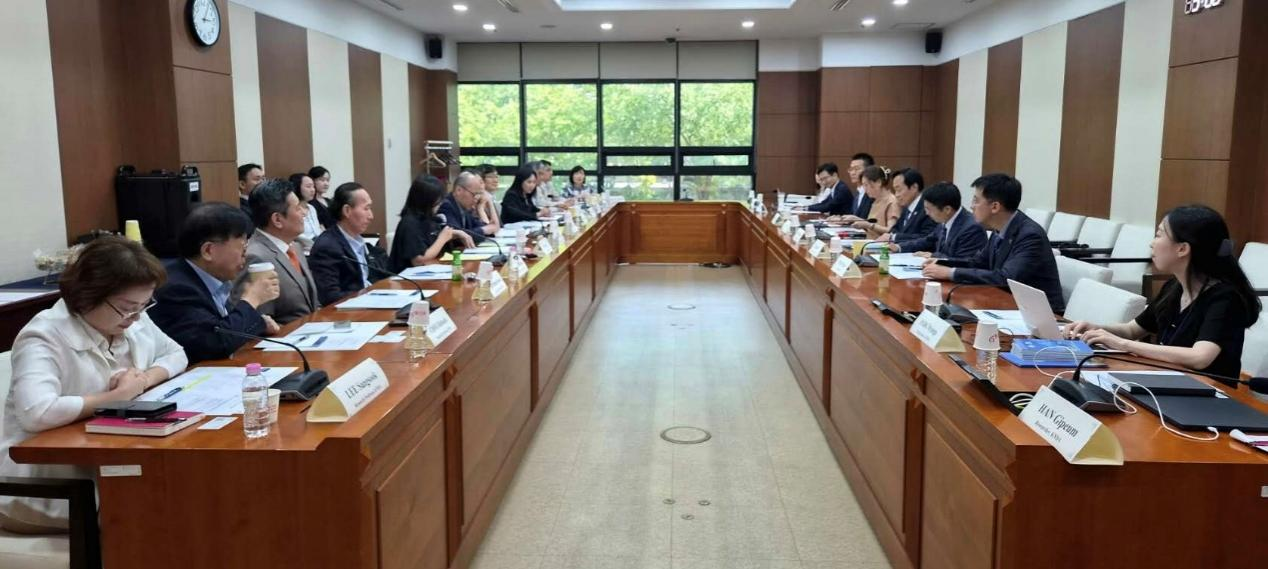
After the meeting, Secretary Wang Shiting delivered a special lecture entitled 'Strengthening Think Tank Exchanges to Jointly Promote Steady and Sustained Asian Cooperation' at a seminar organized by the KNDA, focusing on the vision of building a community with a shared future for humanity. He emphasized that building a community with a shared future for humanity is China's thinking and China's answer to the question of 'what is happening to the world and what should we do about it.' Peace and development in Asia are of great significance to maintaining world prosperity; regional countries are permanent neighbors destined for coexistence and shared prosperity. Therefore, upholding the Asian values of peace, cooperation, openness and inclusiveness and building a community with a shared future in the neighborhood should also be the common aspiration of regional countries.
During the interactive session, the Korean experts showed strong interest in and spoke positively of the vision of a community with a shared future for humanity, and the two sides also fully exchanged views on the international situation and regional hotspot issues. The above events were chaired by Kang Myung-il, Senior Executive Director of the Institute of Foreign Affairs and National Security of the KNDA, and attended by heads of departments and researchers of the KNDA including Choi Woo-seon, Director-General of the Department of National Security and Unification Studies, Kim Han-kwon, Director of the Center for Chinese Studies, and Cho Yang-hyun, Director of the Center for Japanese Studies.
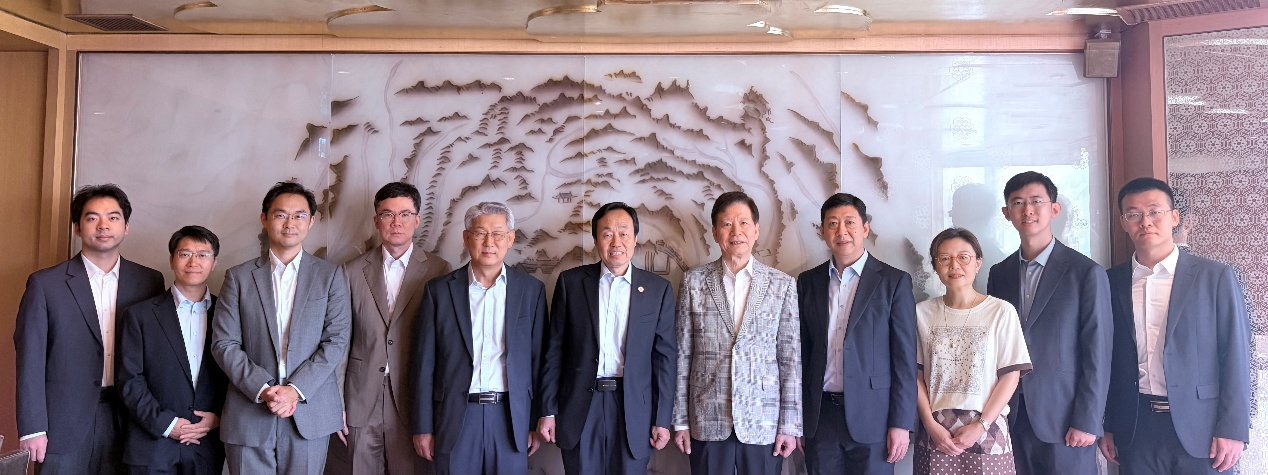
On August 13, Secretary Wang Shiting and his delegation had a working meal with Chung Sang-ki, Professor at the Seoul School of Integrated Sciences and Technologies (aSSIST) and former ROK Ambassador for Northeast Asian Cooperation, Kim Sung-soo, Research Fellow at the Center for Civic Politics of Konkuk University and former ROK Ambassador to Ghana, Ha Dae-guk, Director for ASEAN Affairs of the ROK Ministry of Foreign Affairs, and Jung Yong-joon, Professor at Kinki University.
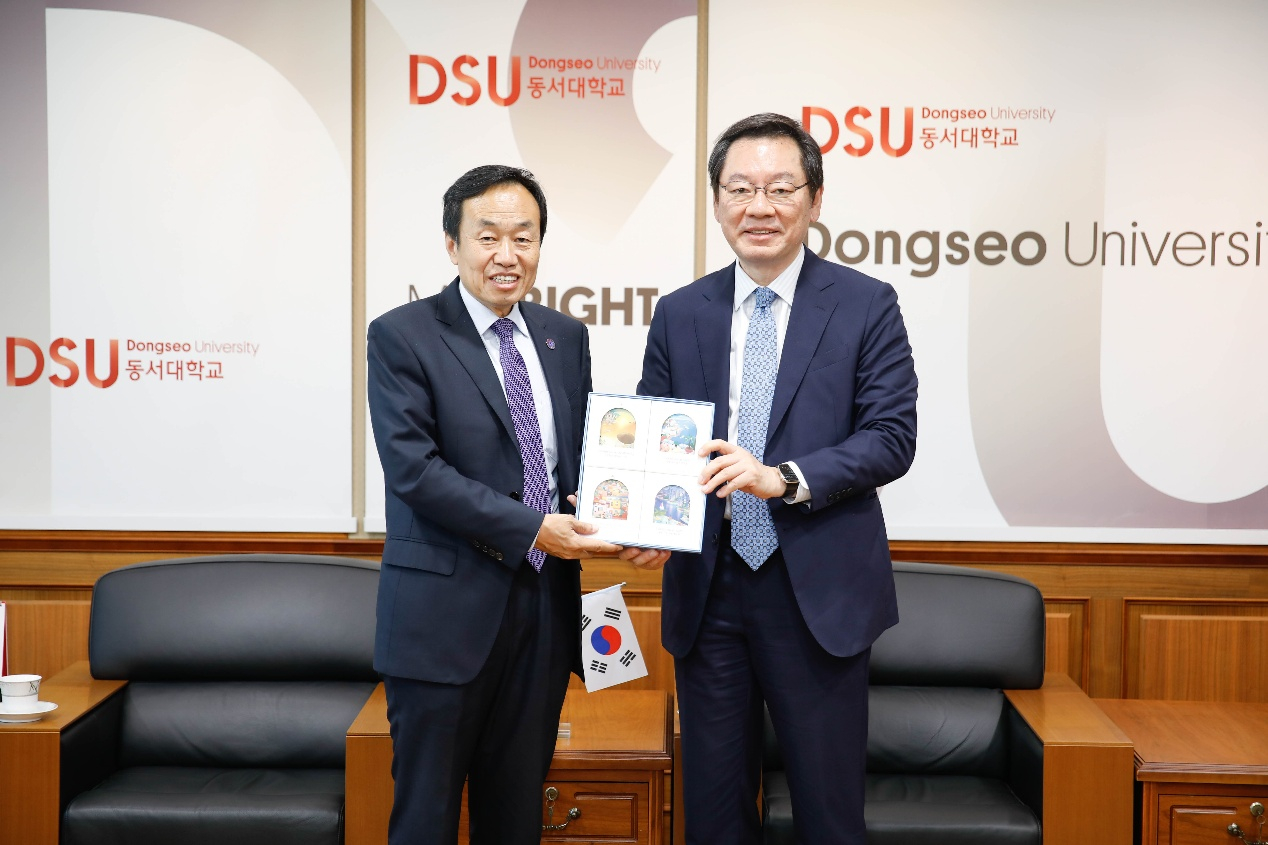
On August 14, Secretary Wang Shiting paid a courtesy call on Jekuk Chang, President of Dongseo University. The two sides introduced the educational strengths of their respective universities and reached a preliminary intention to cooperate. Shin Jung-seung, former ROK Ambassador to China and Dean of the East Asian Institute of Dongseo University, and Choi Hong-sung, Director-General for International Cooperation of Dongseo University, among others, attended the meeting.
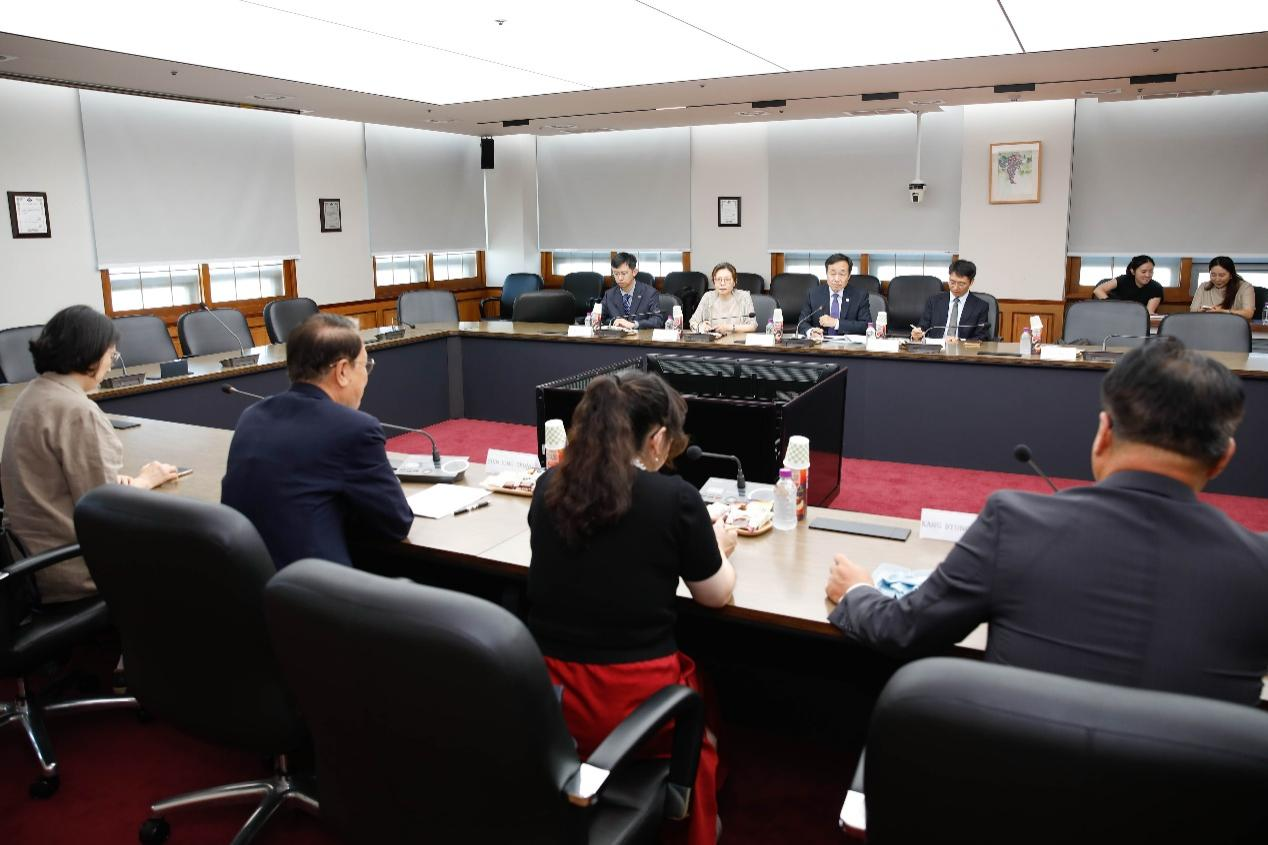
After the meeting, Secretary Wang Shiting and his delegation held academic exchanges with scholars of the China Research Center of Dongseo University, one of the most influential China research institutions in the ROK, of which Ambassador Shin Jung-seung was the founding director. Secretary Wang Shiting focused on introducing the vision of a community with a shared future for humanity, and the two sides held in-depth discussions on the recent international situation and China-Japan-ROK cooperation.
Professor Yang Yue, Deputy Director of the Institute of Asian Studies of CFAU, Associate Research Fellow Miao Ji and Lecturer Zhao Xiao accompanied the delegation in the above activities.
