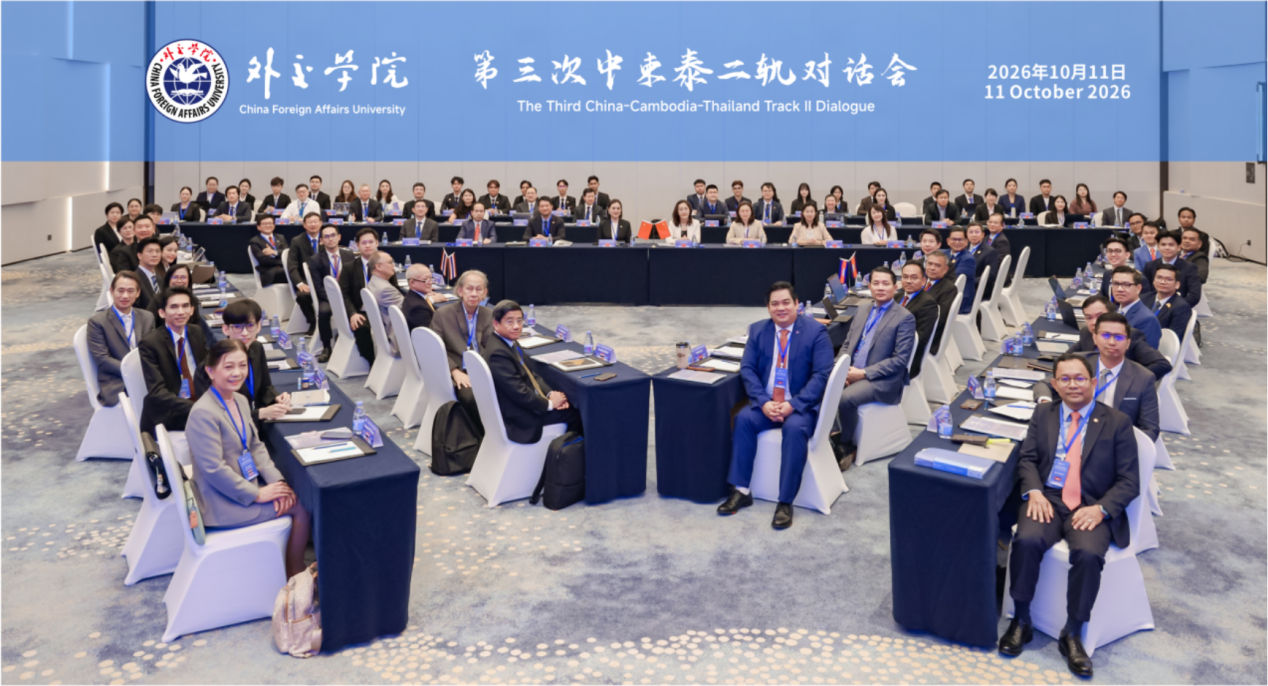
On October 11, 2026, the Third China-Cambodia-Thailand Track II Dialogue, hosted by China Foreign Affairs University under the theme 'Implementing the Fuxian Lake Meeting Consensus, Consolidating the Foundation for Lasting Peace,' was held in Shenzhen. Nearly one hundred participants attended, including think tank scholars, representatives of social organizations and humanitarian agencies, and young university students from China, Cambodia and Thailand. Building on the mutual trust accumulated in the previous two dialogues, this dialogue aimed to take a solid step toward substantively advancing reconciliation between the two sides, and to contribute Track II wisdom and strength to the continued implementation of the five-point consensus of the Fuxian Lake Meeting, the sustained easing of Cambodia-Thailand relations, and the maintenance of regional peace and stability.
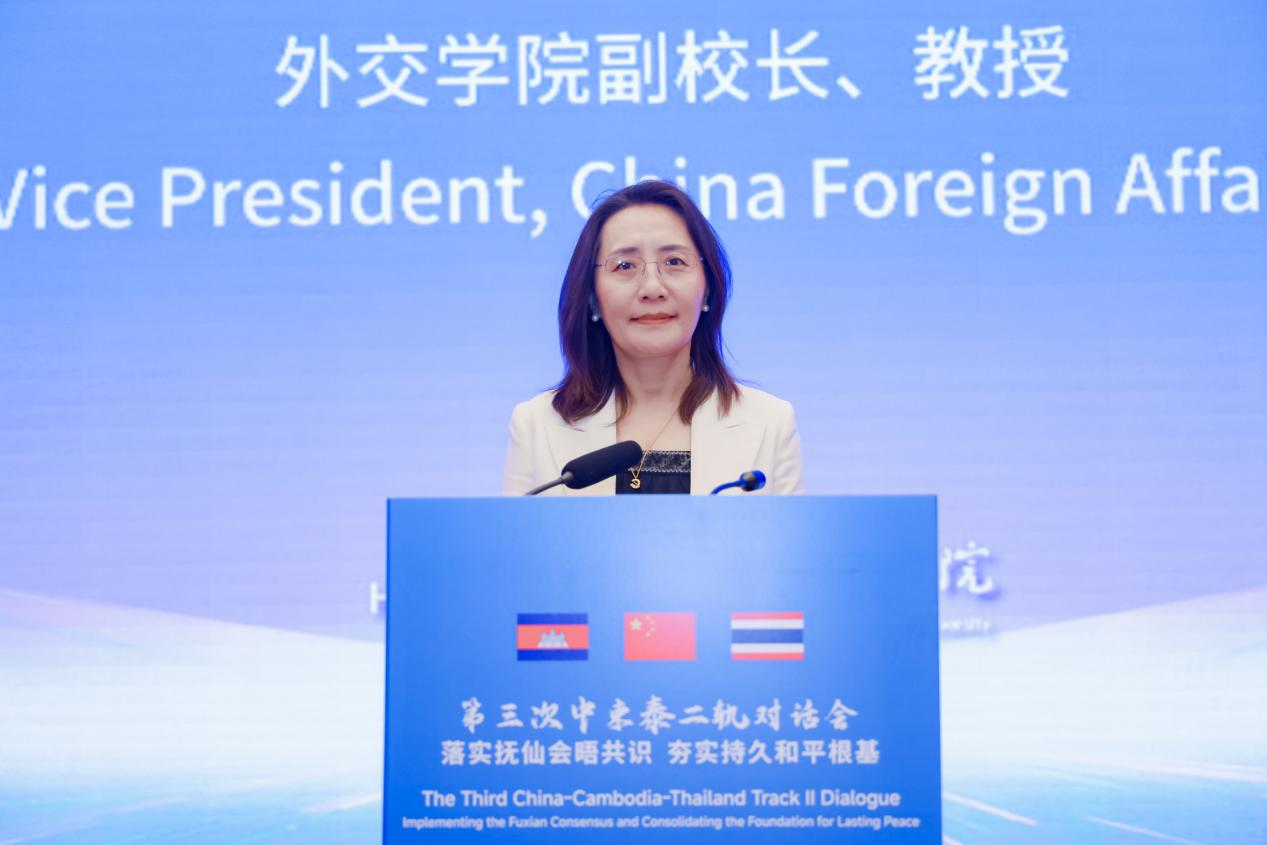
In her opening remarks, Vice President Sun Jisheng pointed out that, compared with the first two dialogues, which focused on comprehensive assessment and channel building, the third dialogue has a more focused and forward-looking task: it must consider not only how to prevent renewed escalation of tensions, but also how to consolidate the foundations for lasting peace. She stressed that rebuilding mutual trust is a key step in resolving the two countries' border conflict dilemma and can create a sustainable foundation for bilateral cooperation. This dialogue brought together representatives from multiple fields, channels and levels of Cambodia and Thailand, promoting understanding through communication and building trust through understanding, fully demonstrating the unique value of Track II diplomacy.
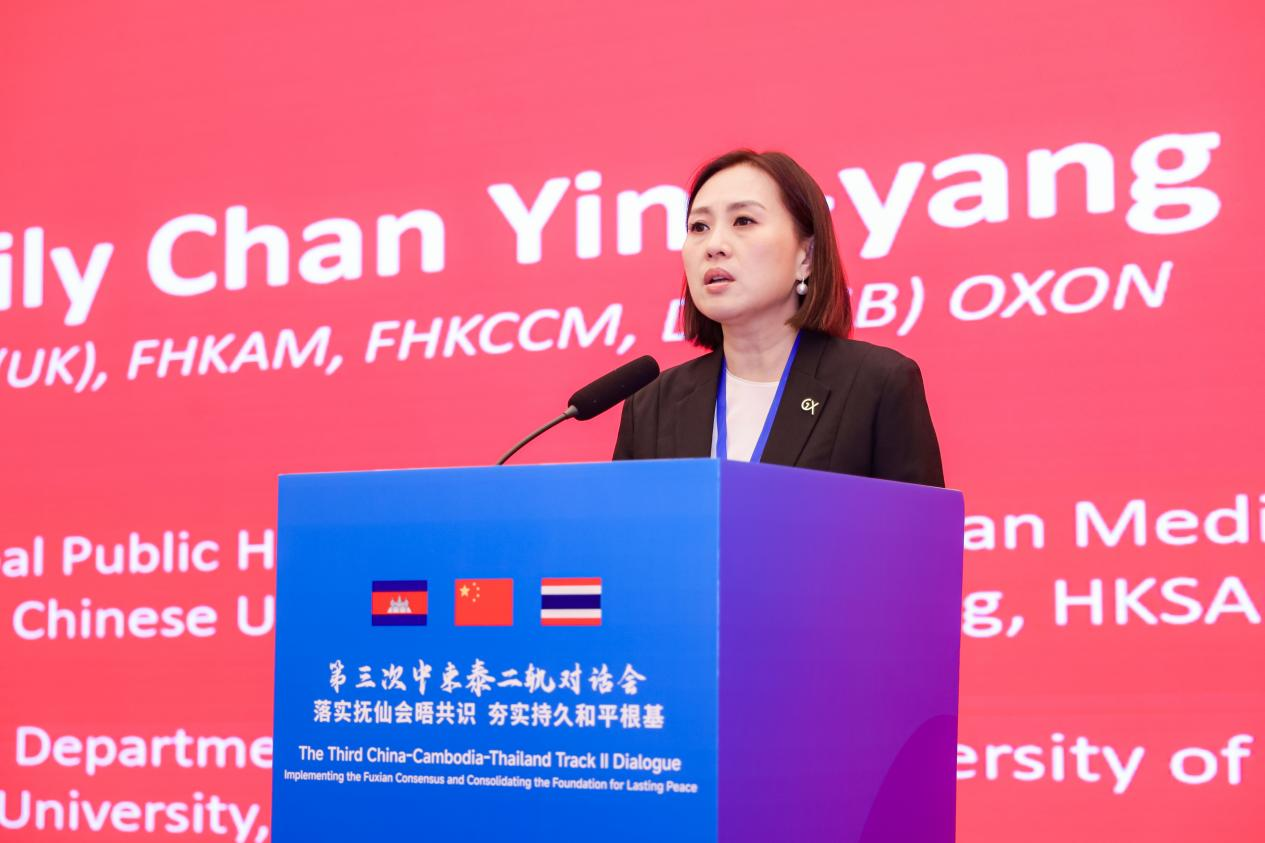
Professor Emily Chan Ying-yang, Chief Executive of the GX Foundation, delivered a keynote speech. She called for translating into concrete action the consensus reached at the previous two dialogues on prioritizing humanitarian assistance and expanding mental health and psychosocial support. Drawing on the GX Foundation's frontline practice in Cambodian communities, she noted that basic public health interventions can not only prevent and control disease but also improve the psychological and social well-being of displaced persons. She advocated a tiered response under the international humanitarian mental health support framework, adhering to the 'assessment–pilot–scale-up' approach and local ownership, so that health becomes a bridge to peace.
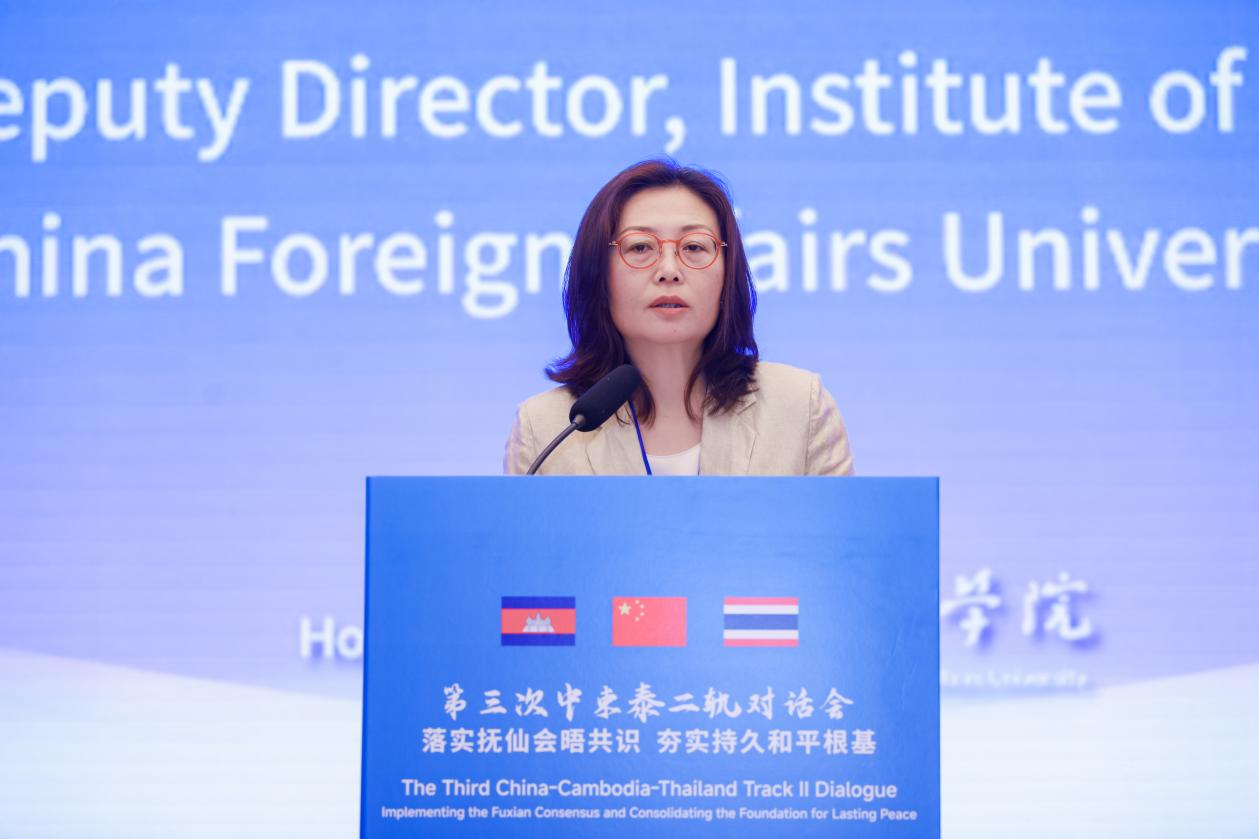
During the opening session, Professor Yang Yue, Deputy Director of the Institute of Asian Studies, read out the Progress Report on the Track II Dialogues. The report introduced the basic principles guiding China's organization of the Track II dialogues and the evolution of the dialogues' design logic, reviewed the outcome documents of previous dialogues, and set out expectations for this dialogue.
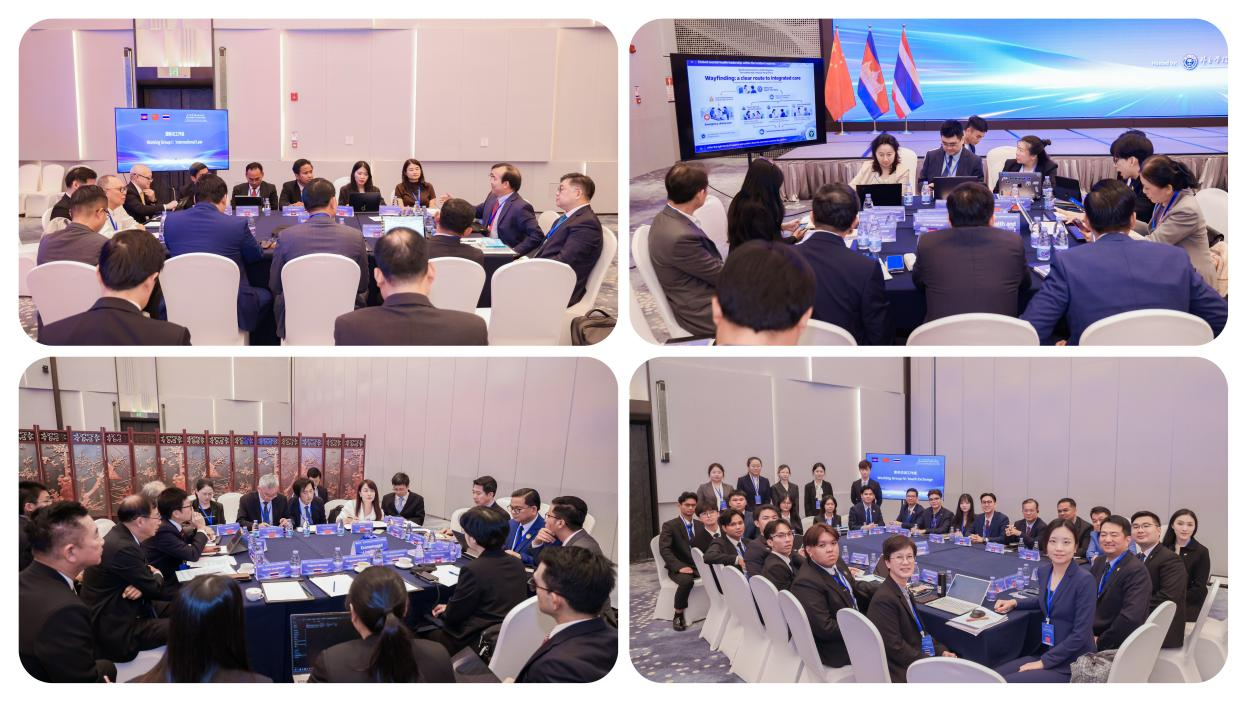
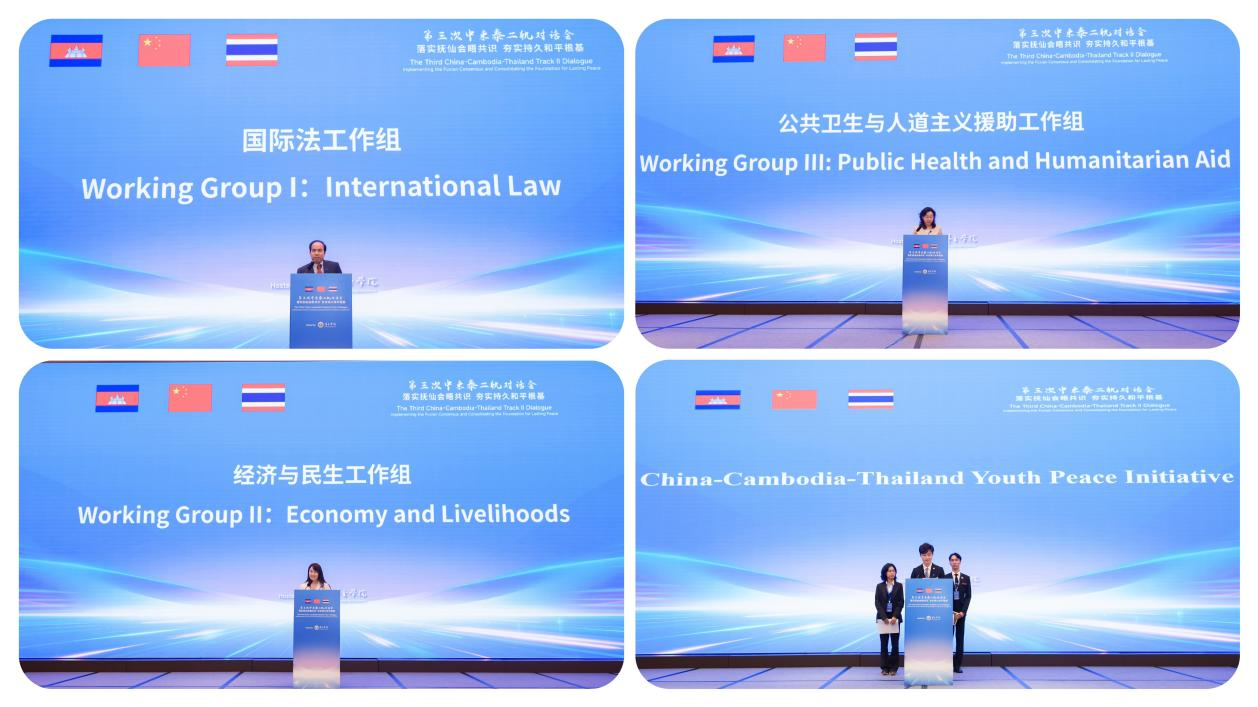
This dialogue featured four parallel working groups, at which representatives from China, Cambodia and Thailand held in-depth discussions on four topics: 'international law,' 'the economy and people's livelihoods,' 'public health and humanitarian assistance,' and 'youth exchanges.' Professor Yi Xianhe of the Department of International Law of CFAU, Professor He Min of the Department of International Economics, Professor Su Xiaoyou of Peking Union Medical College, and Professor Gu Jiayun, Vice Dean of the School of Asian Studies of Beijing Foreign Studies University, chaired the four parallel sessions as conveners respectively. Participants shared views and put forward practical suggestions on specific topics including safeguarding border security, resuming border port flows, restoring the order of daily life for local people, and strengthening the role of youth in the peace process.
At the closing ceremony, Vice President Sun Jisheng spoke highly of the candid exchanges and practical outcomes achieved by all parties. She noted that the vigorous discussions showed that although the parties differ in their views and areas of concern, the two peoples share the same aspiration for peace, stability and development. China Foreign Affairs University will continue to strengthen the Track II dialogue platform, sustain regular exchanges among China, Cambodia and Thailand, and gradually translate the ideas and proposals from the dialogues into practical measures and visible results. More importantly, the highly constructive dialogue between the representatives of the two countries sent a positive message to the world, proving that communication can resolve differences and interaction can build trust.
Participants in the international law working group came from the Office of the Council of Ministers of Cambodia, the Cambodian Society of International Law, the Royal University of Law and Economics, Thammasat University, the Strategic Studies Centre of Thailand's National Defence Studies Institute, and the Thailand-Cambodia Friendship Association. Participants in the economy and people's livelihoods working group came from the Asian Vision Institute (AVI), the Cambodia Development Resource Institute (CDRI), the Cambodian Regional Studies Center, the Royal Academy of Cambodia, the Thai Chamber of Commerce, the Board of Trade of Thailand, the Thailand-Cambodia Business Council, Chulalongkorn University, and Thailand's Institute of Security and International Studies. Participants in the public health and humanitarian assistance working group came from Cambodia's Ministry of Health, the Khmer Counseling and Psycho-Education Service Center, the Cambodian Institute for Cooperation and Peace, Kantharalak Hospital of Thailand, and Thailand's Better Mind mental health service center. Participants in the youth exchange working group came from the Royal University of Phnom Penh, the Cambodia-China Friendship Youth House, the Cambodia Institute for Democracy, and Ubon Ratchathani Rajabhat University. Representatives of the International Organization for Mediation attended the whole dialogue. Representatives of Peking Union Medical College, Peking University Sixth Hospital, the Hong Kong GX Foundation and other institutions, as well as experts and scholars from Chinese universities and think tanks including Beijing Foreign Studies University, Peking University, the Shanghai Institutes for International Studies, Nanjing University and Guangxi University, also participated in the discussions throughout.
After Cambodia and Thailand signed the joint statement on ceasefire on December 27 last year, the foreign ministers and senior military officials of China, Cambodia and Thailand held a meeting at Fuxian Lake in Yuxi, Yunnan, reaching important consensus. In February and April this year, the first two China-Cambodia-Thailand Track II Dialogues hosted by our university were successfully held in Beijing, inviting a total of 56 representatives from Cambodia and Thailand and building a platform for practical communication among think tank scholars and experts from the three countries. Our university is the Chinese national coordinator for regional Track II mechanisms including the Network of East Asian Think-tanks (NEAT) and the Network of ASEAN-China Think-tanks (NACT), and has long cultivated Track II diplomacy and served neighborhood cooperation with its comprehensive disciplinary strengths in international relations, international law, international economics and regional studies. Through candid exchanges, this dialogue further consolidated the consensus on resolving differences through peace and facing the future through cooperation, contributing Track II wisdom to the sustained implementation of the Fuxian Lake Meeting consensus and the steady advancement of the Cambodia-Thailand peace process. It is a vivid demonstration of China's role as a responsible major country, and a concrete practice of the Chinese academic community in the new era actively participating in building an Asian security model and supporting the building of a community with a shared future in the neighborhood through 'using Track II to advance Track I.'
The Institute of Asian Studies thanks the University leadership and all departments, domestic peer institutions, and experts and scholars for their strong support for the event.
Major media outlets including China News Service, China Daily, Global Times and Shenzhen Satellite TV provided comprehensive coverage of the event or published commentary articles.
