The 8th China Financial Education Development Forum, hosted by the National Financial Professional Degree Graduate Education Steering Committee and co-organized by the School of Economics and the Institute of Finance at Jinan University, was held in Guangzhou from December 12 to 13, 2025. Centered on the theme “Digital Intelligence and Building a Financial Powerhouse,” the forum attracted nearly 400 experts and scholars from over 200 universities, financial institutions, and enterprises nationwide. Zhang Wenjia, Vice Dean of the School of International Economics at the China Foreign Affairs University, and young faculty member Wang Yancong were invited to attend.
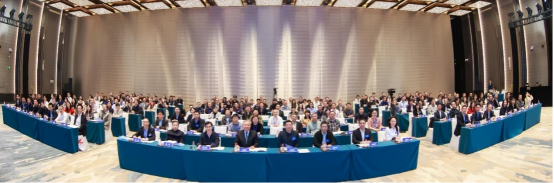
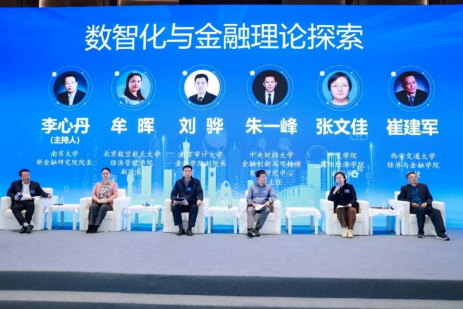
The forum featured keynote speeches, roundtable discussions, and specialized sub-forums, where participants engaged in in-depth discussions on topics including financial talent cultivation, digital finance practices, and building a financial powerhouse. At the “Digital Intelligence and Financial Theory Exploration” roundtable held on the afternoon of the 13th, Professor Zhang Wenjia delivered a keynote address. She emphasized that digital intelligence signifies not only technological advancement but also drives a profound transformation in financial theoretical paradigms—traditional analytical frameworks centered on information asymmetry, the rational actor assumption, and the efficient market hypothesis are being reshaped by on-chain information transparency, algorithmic rationality, and dynamic complex systems. In practical applications, digital intelligence has spurred a series of innovative breakthroughs: monetary forms are evolving into programmable, self-compounding “capital protocols,” while real-world assets (RWAs) achieve “digital twin” mapping through tokenization. These transformations are reshaping the logic of financial operations while posing new challenges to traditional pricing theories, property rights systems, and financial modeling.
This conference provided an excellent platform for the school to connect with industry frontiers and broaden academic horizons. It helped participants gain a precise understanding of theoretical advancements and practical developments in the financial sector within the context of digital intelligence. The event offered valuable insights for the School of International Economics to further optimize its disciplinary curriculum and advance scientific research innovation.
